 The Green Fee
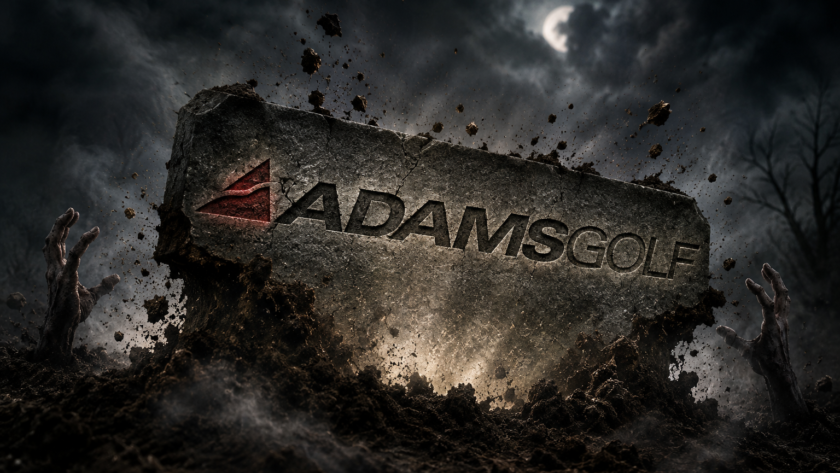
 Why I Can’t Stop Thinking About Dead Golf Brands
Lately I’ve been fascinated by how golf brands evolve, especially their marketing strategies and release schedules. When TaylorMade announced they were moving to a two-year release cycle, I was genuinely shocked. Partly because TaylorMade, of all companies, making that shift felt almost unthinkable. And partly because the announcement barely generated the conversation I expected.
Rewind to the mid-to-late 2000s through the mid-2010s, and TaylorMade was releasing new product constantly, sometimes multiple times a year. Watching that same company slow down to a two-year cycle got me thinking about brand strategy in a completely different way: how would I revive a dead golf brand, and how would I market it back into relevance?
So let’s dive into a brand I believe was making some of the best clubs of its era: Adams Golf.
Why Adams Golf?
When picking a brand for this exercise, two things mattered most.
First, brand recognition. I wanted a name that wasn’t too old. Brands like MacGregor, Ram, and Walter Hagen had their moment and can still generate a “that’s cool” reaction from certain golfers, but by the end of their run, they’d become generic store brands. They simply don’t carry strong recognition with most millennial golfers. MacGregor still resonates with older players, but a lot of them associate the name with decline rather than quality.
Adams Golf, on the other hand, left the market while it was still making genuinely great equipment.
Second, real heritage. I wanted a brand people remember as legitimately good, not just nostalgic. To this day, I think some of the best value-for-money clubs on the used market are older Adams products. Clubs like the Adams Idea Super LS driver and fairway wood are still excellent, especially at their price point. I’m fairly sure I still have one of those heads sitting in a bag in my office right now. Adams took real design risks and consistently delivered strong products. It’s genuinely hard to find golfers with something negative to say about Adams equipment.
The History of Adams Golf
Adams Golf was founded in 1991 by Barney Adams. Adams got his start by purchasing assets from golf legend Dave Pelz and spent his early years manufacturing components before pivoting to design his own clubs.
That pivot produced the Tight Lies fairway wood, a brilliant, low-CG, high-launching design that made the game noticeably easier for amateurs. It picked up unpaid PGA Tour play almost immediately, always a strong signal that a product is genuinely good. The Tight Lies sold well enough that Adams went all-in on an infomercial campaign, which is what really pushed the club into the mainstream. It became so widely distributed that you can still find Tight Lies fairway woods in thrift stores today.
The Hybrid Era
From there, Adams built the category they’d become best known for: the hybrid. The original Idea Pro Hybrid, launched in 2008, is the club every modern hybrid should trace its lineage back to. With its distinct peanut-shaped head and bright yellow sole stripe, it quickly became the number one hybrid on tour.
Adams followed it with a string of standout hybrids, including the Boxer, the A series, and the final true Adams hybrid, the XTD. The brand had a habit of releasing tour prototypes that looked incredible and often outperformed their retail counterparts.
The Iron Lineups
Adams also built a strong iron lineup, though it didn’t fully click with golfers until 2010, when the brand released the Idea Pro CB, Idea Pro Blade, and A4 Forged. That run was followed by one of my personal favorite irons of all time, the Adams CB2. It had everything: the look, the feel, and the performance. I remember hitting it for the first time and falling in love instantly.
Adams kept the momentum going from there, eventually releasing what may be my favorite Adams iron ever made, the CMB. They were hot sellers and looked just as good as they performed.
Drivers Weren’t an Afterthought
Adams didn’t neglect drivers either. Longtime fans will remember the 9064LS, an absolute bomber off the tee. I’ve also played the Fast 12LS, and I couldn’t miss the center of the face with that club. Selling mine is still one of my bigger equipment regrets.
How Adams Golf Ended
Adams Golf was sold to TaylorMade in 2012. A handful of releases followed under new ownership, most notably the XTD lineup, which paired premium materials with a TaylorMade adjustable hosel sleeve for easy shaft swaps.
After that, TaylorMade shifted Adams into a full game-improvement identity with the Adams Blue lineup, later followed by a slightly more player-focused Red version. From there, the brand lost its identity. TaylorMade attempted to reintroduce Adams once more, but the resulting products felt generic, cheap, and disconnected from everything that had made the brand special in the first place.
What Comes Next
For this series, I’m going to build out my own game plan for Adams Golf, as if I’d bought the brand back from TaylorMade with a serious budget behind me. What products would I release? How often would I release them? What would the marketing strategy actually look like?
It’s all coming. Follow along as this series continues.
[…] you missed Part 1, catch up on the history of Adams Golf here before diving in. Everything below builds directly on why this brand still […]