 The Green Fee
 What Do You Want to Be Known For?
The biggest question any golf brand has to answer is simple: what do we do better than anyone else in the industry?
Say “TaylorMade” and the first thing that comes to mind is woods. Say “Titleist” and you think Scotty Cameron putters, Vokey wedges, and elite irons. Mizuno means irons. Callaway means strong drivers, and Odyssey owns the putter conversation.
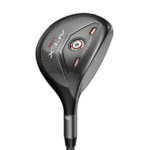
So how does Adams answer that question? The first thing I instantly associate with the Adams name is hybrids and fairway woods. The strategy here isn’t to be mediocre everywhere else, every category in the lineup still needs to be genuinely good. But hybrids and fairway woods are where Adams needs to be exceptional, good enough to sneak into a handful of tour bags organically.
The Elephant in the Room: Tour Exposure
The obvious move is to pay for tour exposure, sign a player, get the logo on TV every Sunday. It’s tempting, but it’s also expensive, and the track record isn’t great. Ask Honma, Axis Putters, or McLaren Golf how it worked out paying for a Justin Rose endorsement. A tour deal looks great on paper, but it’s far from a guaranteed return.
A smarter, slightly less traditional path: get the clubs into the hands of genuinely good amateur players. That means:
- Sponsoring club championships and offering winners a free custom fitting and club
- Backing a strong slate of city amateur tournaments with the same incentive
This puts the product directly into the hands of better players at the local level. When those players hit it well, the rest of the club notices, wants to see it, touch it, and eventually buy it.
This is exactly how zero-torque putters caught on. Tour play got people curious initially, but the sustained success came from watching the best players at your own home club switch over. If it’s good enough for them, the thinking goes, it’s good enough for me. That’s the exposure model Adams should chase.
Let’s Talk Dollars
One of the most common mistakes new entrants make when trying to break into the golf market is wildly overestimating how much disposable spending is actually out there. Pricing a new brand the same as TaylorMade or Callaway is a fast way to fail. If a TaylorMade driver costs $600, why would anyone buy an unproven brand’s driver for $575, even if it performs better? There’s no social cost to playing the TaylorMade, and it’ll still be worth roughly $350 in trade value next year. An Adams driver, by comparison, might fetch $100. A new brand has to offer real, obvious value from day one.
Here’s how the pricing breaks down across the lineup, kept consistent across Idea Pro and Speedline (with irons as the one exception):
| Category | Adams Price | Context |
|---|---|---|
| Drivers | $450 | New flagship drivers now push $650, putting Adams in line with a previous-year model from a major brand, but with full current-year customization |
| Fairway Woods | $275 | New big-brand woods run around $400; this also directly undercuts the used market, where a last year’s preowned wood sells for $250-$275 |
| Hybrids | $200 | Priced to compete directly with the preowned market, which is realistically who Adams is competing against anyway |
| Idea Pro / Speedline Irons | $999 (set) | Forged, premium construction at a price that undercuts major brands while still competing with the preowned market |
| Tight Lines Irons | $799 (set) | A strong value for a G20-style game improvement iron |
The goal across every category is the same: undercut the major brands enough to be an obvious choice, while staying competitive with the preowned market, which is the real competition for any new brand.
Release Cycles: Learning From the Past
Golf fans love to criticize TaylorMade and Callaway, especially in their earlier years, for releasing multiple drivers per year or running an aggressive annual release cycle. What most people missed at the time: both companies were actually running two rotating lineups, not releasing endless new product into the same category.
One lineup targeted the everyday golfer (think Jetspeed, AeroBurner, Mavrik). The other targeted the tech-forward better player (think the R-Series, Big Bertha Relaunch, SLDR). Each lineup got updated in alternating years, so it felt like constant releases, but any individual golfer’s category was really only refreshing every other year.
PING ran a similar structure. One year the G-Series got the update. The next year it was the I-Series, then the K-Series.
The Adams Approach: A Hybrid Model
For Adams, I’d split the release cadence by lineup:
- Tight Lines gets a yearly refresh. New golfers enter the game every year, and this is the entry-point lineup. Keeping it current gives new players access to the latest technology and, hopefully, helps them fall in love with the game early.
- Idea Pro and Speedline rotate on a multi-year cycle.
The logic behind the slower cycle is simple: golfers want confidence that they aren’t buying into a product that’ll be outdated in two months. They also want a real reason to consider upgrading in a couple of years, not a marginal refresh that doesn’t justify a second look. Annual releases eventually raise an uncomfortable question: how much could the product really have changed in twelve months?
This is roughly where PING sits today, updating the full lineup every other year, with a mid-cycle “K” version released in between to keep the lineup feeling fresh without a full relaunch.
Conclusion
This was a genuinely fun exercise to think through. Golf marketing has improved significantly in recent years, performance gains across the industry have slowed, and what companies are actually targeting with new releases has shifted as a result.
DTC brands have already reshaped how golfers think about pricing, and a legitimate lower-cost alternative now exists in the market. Are all of them good? No. Are they all bad? Also no. They have real shortcomings, chief among them, the lack of proper fitting, which forces buyers to already know their exact specs going in.
This entire hypothetical Adams relaunch was built to solve exactly that problem: keep the pricing advantage that makes DTC brands appealing, while fixing the fitting and customization gaps that hold the category back.